<h1>Leider kann Ihr Browser keine Frames darstellen!</h1>
<p>Verwenden Sie in diesem Fall die Noframes-Home-Seite für die Navigation. Den Link finden Sie auch am Ende jeder aufgerufenen Seite wieder.</p>
<hr>
<a href="../../noframes_home/noframes_home.html">Zur Noframes-Home-Seite</a><br>
<hr>
|
|
|
 |
|
 |
|
|
|
 |
|
|
|
|
 |
|
|
|
|
|
|
|
|
|
|
|
|
|
|
|
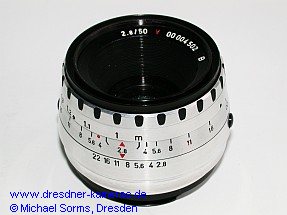
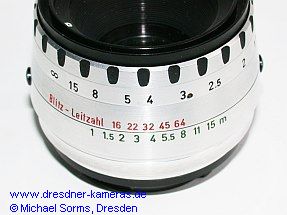
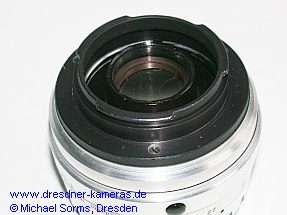
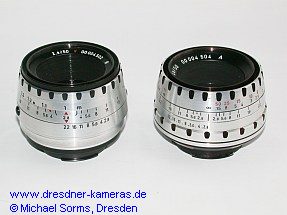
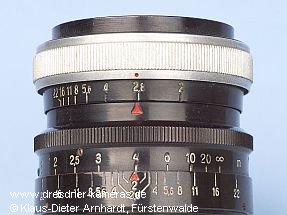
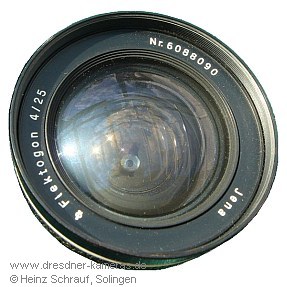
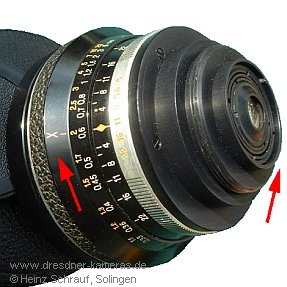
This page presents optics that are test samples, prototypes, pre-production models, name variants, one-off pieces or modifications.
|
|
|
|
Contents:
1. Name variants
2. Rare special lenses
3. Prototypes and pre-production models
4. Test samples / sample lenses
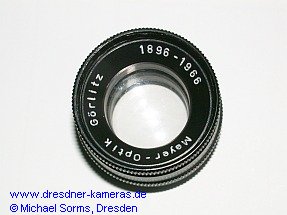
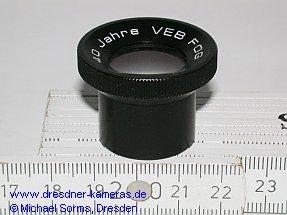
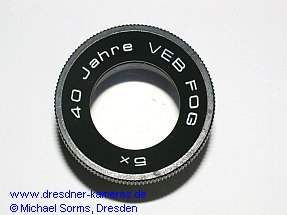
5. Promotional lenses
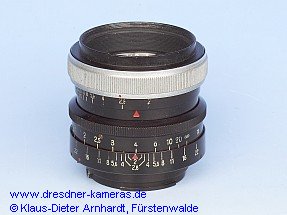
6. Other special lenses
|
|
|
|
 |
|
|
|
1. Name variants
|
|
|
|
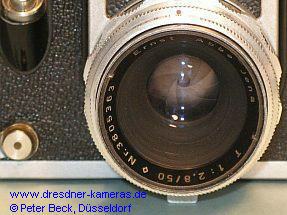
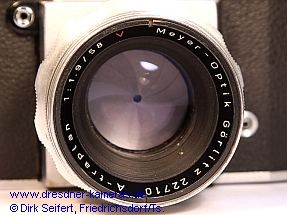
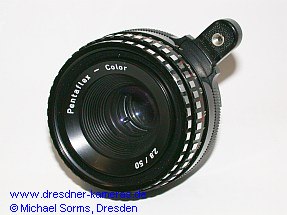
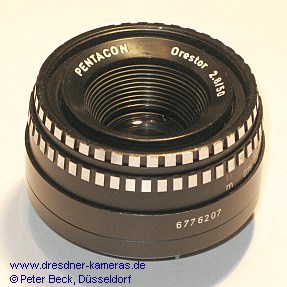
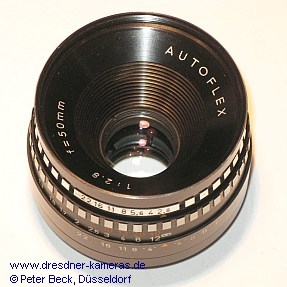
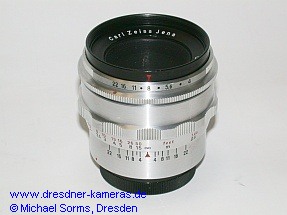
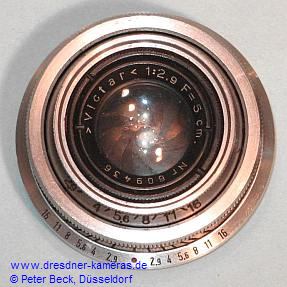
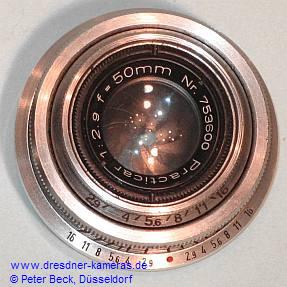
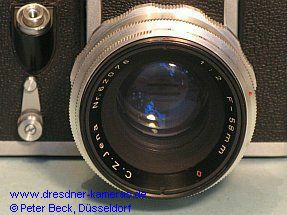
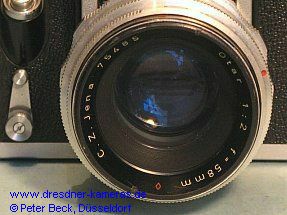
For various reasons, numerous different names exist for well-known East German lenses. In the case of Carl Zeiss Jena lenses, legal disputes over trademark rights were usually the cause of renamings such as B (Biotar), Otar (Biotar), T (Tessar), Bm (Biometar), Ernst Abbe Jena, aus Jena, CZ Jena, and similar variations. Lenses from the Feinoptisches Werk Görlitz (Meyer-Optik) were also renamed, but here the reasons were mostly sales tactics.
|
|
|
 |
|
 |
|
|
|
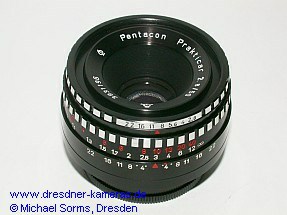
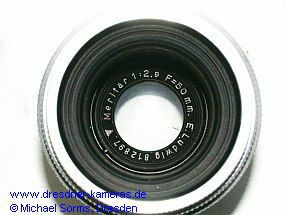
E. Ludwig Victar 1:2.9 F=5cm - This lens from the late 1940s also existed as a very rare variant,
the Practicar 1:2.9 f=50mm, for export to the USA. While Victar lenses are known as M40x1, and less frequently as M42x1 or Exakta lenses, the Practicar appears to exist only as an M42x1 variant.
|
|
|
|
 |
|
 |
|
|
|
|
|
|
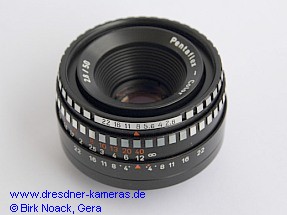
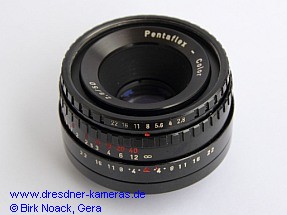
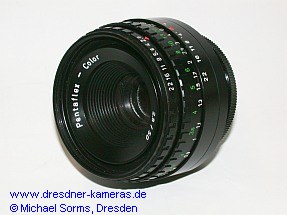
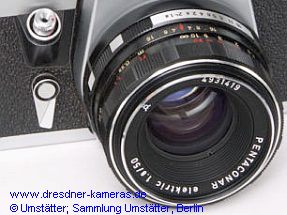
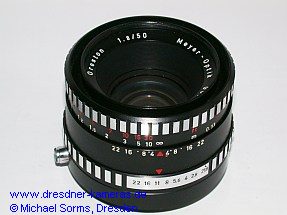
Pentaconar electric 1.8/50
(M42 electric) #4931419, an extremely rare variant of the Oreston 1.8/50; catalogs from around 1970 list numerous Pentaconar lenses. However, it has always been assumed that the naming of the lenses was changed not to Pentaconar but directly to Pentacon electric or Pentacon auto. In this particular case, the incorrect spelling of the word "electric" should also be noted; the engraving reads "ele
k tric".
|
|
|
|
|
|
|
|
|
|
|
|
|
|
|
|
 |
|
 |
|
|
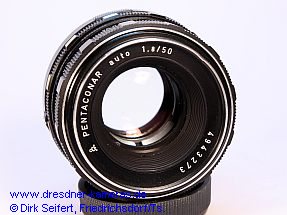
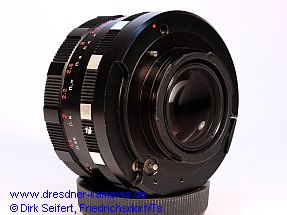
Another Pentaconar, more precisely a Pentaconar auto 1.8/50
(Exakta RTL 1000) #4943273, is now known.
|
|
|
 |
|
 |
|
|
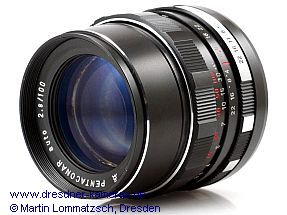
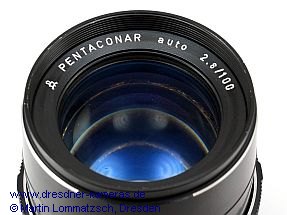
Pentaconar car 2.8/100 (M42x1) #4928046
|
|
|
|
 |
|
 |
|
|
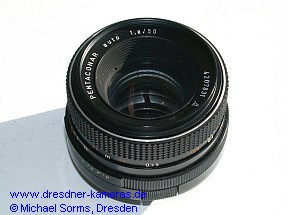
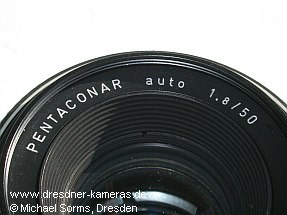
Pentaconar auto 1.8/50
(M42x1) #4207831; what's striking about this lens is that a late design version was given a relatively early serial number. However, since the lens comes from the archives of the Görlitz Fine Optics Works, it's more likely to be a factory prototype than a cobbled-together modification.
|
|
|
Pentaconar serial number ranges:
These very rare optics consistently appear within specific serial number ranges. Currently, all optics are limited to the following serial numbers: 420783X (likely a sample), 49280XX, 49314XX, 4943XXX.
Pentaconar models:
The following models are currently documented: Pentaconar electric 2.8/29; Pentaconar auto 1.8/50; Pentaconar electric 1.8/50; Pentaconar electric 1.8/50; Pentaconar auto 2.8/100
|
|
|
|
|
|
|
2. rare special optics
|
|
|
|
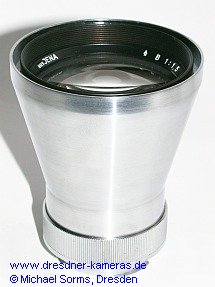
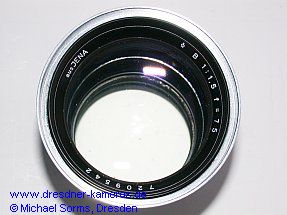
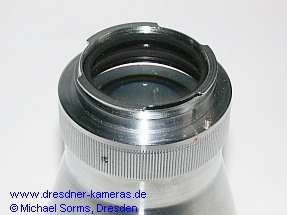
Carl Zeiss Jena Biotar 1:1.5 f=75 (Measuring optics without meter markings)
This optics, without meter markings and without an aperture, is the only example of this design ever manufactured by Carl Zeiss Jena. It is likely a measuring optics.
|
|
|
|
|
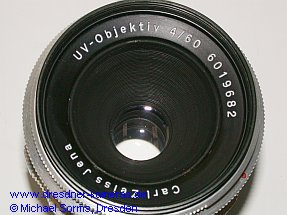
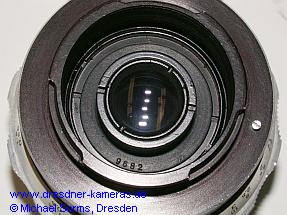
Carl Zeiss Jena UV-Objektiv 4/60
Eines der seltenen Jenaer Objektive ist zweifellos das
UV-Objektiv 4/60. Dieser Dreilinser mit Blendenvorwahl (4-5,6-8-11-16-22) wurde Ende der 1950er und Anfang der 1960er Jahre in mehreren sehr kleinen Chargen gefertigt und diente der wissenschaftlichen Fotografie im
unsichtbaren ultravioletten Wellenbereich bis 300 nm (1 nm = 1 Nanometer = 1/1 000 000 mm). Laut Prospekt waren folgende Anschlüsse vorgesehen: Exakta, M42x1 und
Praktina. Derzeit sind folgende Nummernkreise dieses Spezialobjektivs bekannt: 4 665 xxx; 6 019 xxx; 6 389 xxx und 7 289 xxx (siehe auch Tabelle unten)
UV-Objektive werden
meist aus Quarz hergestellt, um eine optimale Durchlässigkeit im gewünschten Nanometer-Bereich zu erreichen. Bei dieser Optik konnte jedoch auf die Verwendung von Quarz verzichtet werden, da die drei einzeln
stehenden Linsen aus Spezialgläsern bestehen, die für kurzwelliges Licht gut durchlässig sind. Zu Gunsten dieser Durchlässigkeit wurde das Objektiv nicht chromatisch korrigiert, daher ist es nur für
monochromatisches Licht verwendbar (keine Fluoreszenzaufnahmen).
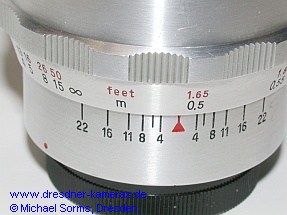
Die für Arbeiten im UV-Bereich notwendige Auszugsverkürzung wurde bei dieser Optik bereits berücksichtigt. Das bedeutet, dass eine Scharfstellung
nicht nach der Mattscheibe der Kamera erfolgt, sondern der zuvor gemessene Aufnahmeabstand direkt an der korrigierten Entfernungsskala eingestellt werden muss. Die kürzeste Aufnahmeentfernung liegt bei knapp
0,5 m (1,65 feet).
Für reine Aufnahmen im ultravioletten Wellenbereich wird noch ein zusätzlicher UV-Durchlass-Schwarzfilter UG 2 benötigt, der den Anteil des sichtbaren Lichts nahezu ausschaltet,
jedoch damit auch zu hohen Verlängerungsfaktoren bei der Belichtung führt.
Diese seltenen UV-Optiken erzielen, wenn sie überhaupt einmal in einer Online-Auktion angeboten werden, meist 3-4-stellige Preise.
|
|
|
|
|
nach Rücksprache mit Hartmut Thiele, Autor des
?Fabrikationsbuch Photoptik Carl Zeiss Jena?, sind folgende Stückzahlen des Jenaer UV-Objektivs möglich:
|
|
Nummernkreis
|
Stückzahl
|
Bemerkungen
|
|
4 665 206 - 4 665 215
|
maximal 10
|
Lücke im CZJ-Datenbestand; max. 10 UV-Optiken möglich
|
|
4 665 331 - 4 665 340
|
maximal 10
|
Lücke im CZJ-Datenbestand; max. 10 UV-Optiken möglich
|
|
6 019 680 - 6 019 700
|
21
|
gesamter Nummernkreis nur UV-Optiken
|
|
6 389 386 - 6 389 415
|
30
|
gesamter Nummernkreis nur UV-Optiken
|
|
7 285 701 - 7 289 601*
|
maximal 30*
|
Lücke im CZJ-Datenbestand; max. 3900 Optiken insgesamt; nicht mehr
als 30 Stück UV wahrscheinlich*
|
|
Remarks:
* Due to the limited user base, the production numbers for the optics never exceeded 30 units; therefore, within the data gap between 7 285 701 - 7 289 601, a lower, rather than a higher, production number is to be expected.
|
|
|
|
|
|
|
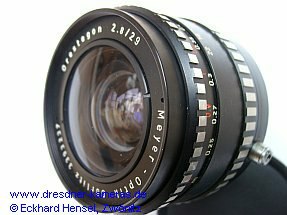
Meyer Orestegon 2.8/29
(Exakta Automatic) #3393237; as described above for the Oreston 1.8/50
|
|
|
|
|
|
|
|
|
|
|
|
|
|
|
|
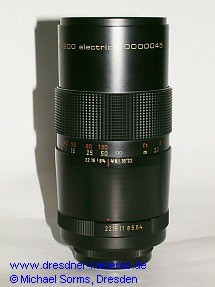
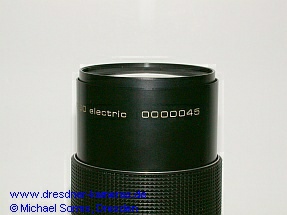
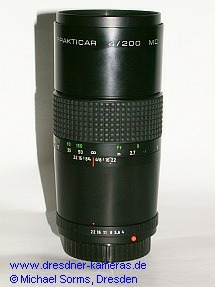
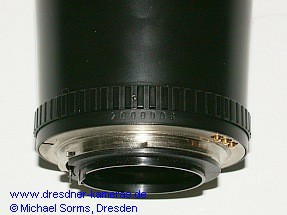
Pentacon electric 4/200 (M42 electric) #0000045 pre-production model
|
|
|
|
 |
|
|
|
 |
|
|
|
|
|
Pentacon Prakticar 4/200
(Praktica B) #2000006 Pre-production model 1982; No series production took place here, fewer than 10 lenses are currently known.
|
|
|
|
 |
|
|
 |
|
|
|
|
|
|
 |
|
 |
|
|
|
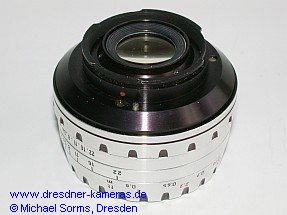
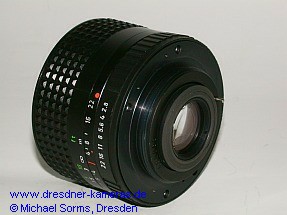
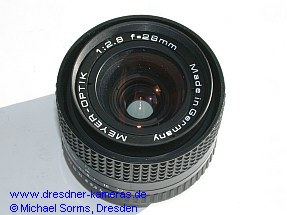
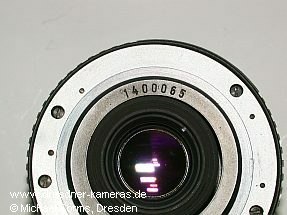
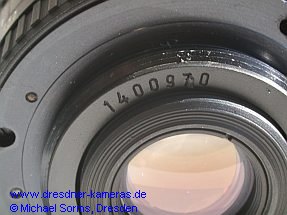
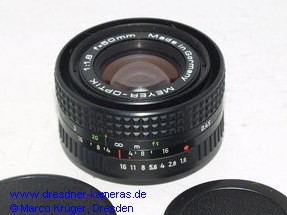
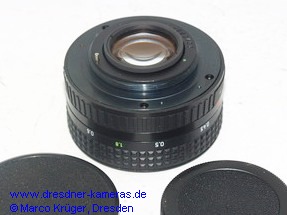
M42-Meyer-Optik 2.8/28
(M42 Automatic) #1400065 and #1400970, manufactured in 1991, this lens in Praktica-B design exists only in a small number (pre-series?) with M42 connection
|
|
|
 |
|
|
|
 |
|
|
|
|
|
M42-Meyer lens 1.8/50
(M42 automatic) #10034XX, manufactured in 1991, this lens in Praktica-B design also only exists in a small number (pre-series?) with M42 mount.
|
|
|
|
|
|
|
|
3. Test samples / Sample lenses
|
|
|
|
 |
|
|
|
 |
|
|
|
|
|
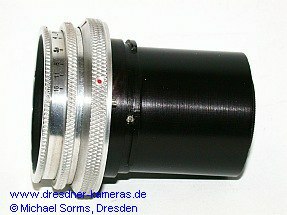
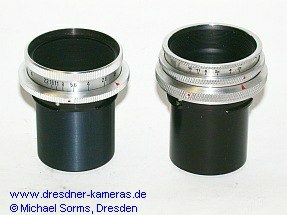
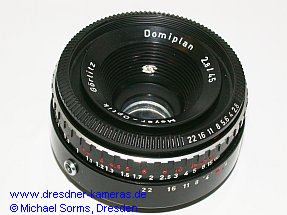
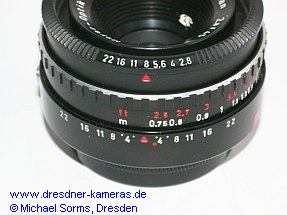
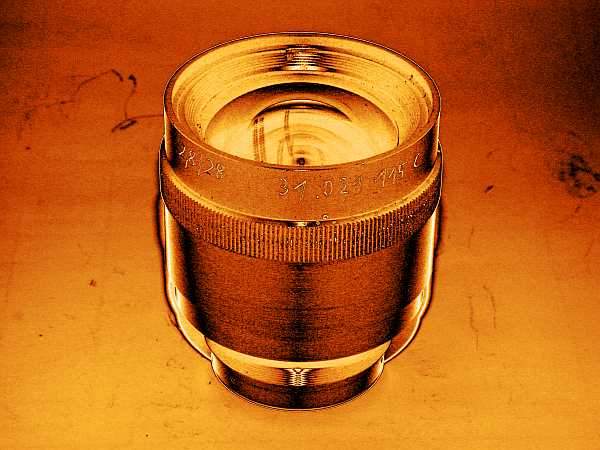
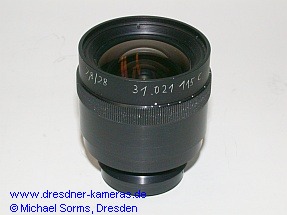
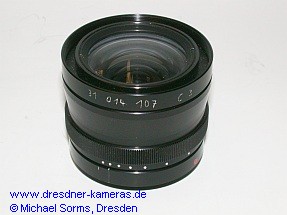
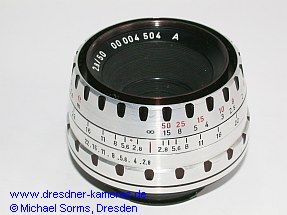
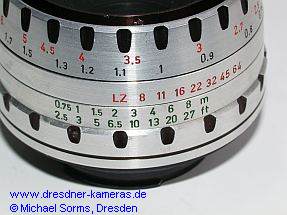
Unlike the experimental lenses shown below, these two Meyer experiments, 2.8/28 and 2.8/30, do not yet have the standard lens housing. Here, turned aluminum parts were fitted with the planned lens combination, and the focusing ring was omitted. The experiments served to test the lens combination at infinity focus.
|
|
|
|
 |
|
|
|
 |
|
|
|
|
|
|
|
|
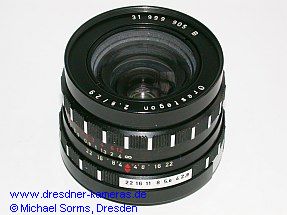
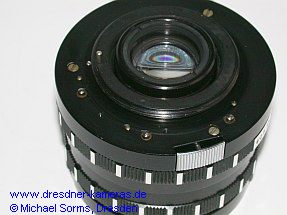
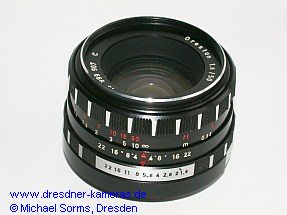
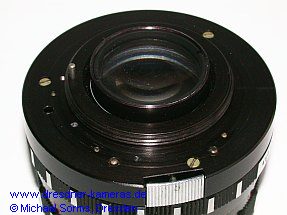
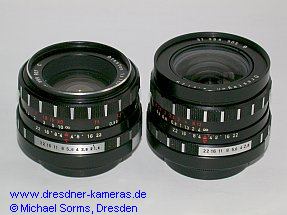
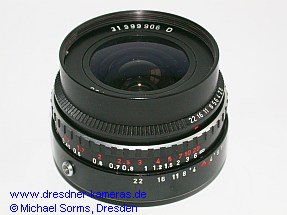
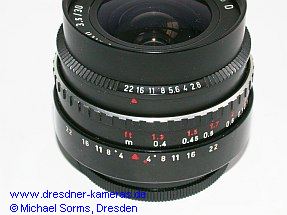
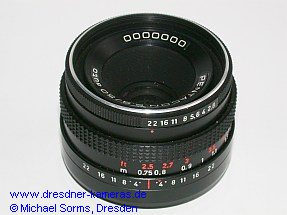
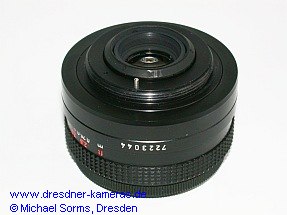
Comparison of Meyer Orestegon 2.8/29 (M42 electric) test sample 31 999 905 B and Meyer Oreston 1.8/50 (M42 electric) test sample 15 999 907 C
|
|
|
|
|
|

|
Here is a personal, but of course purely subjective, recommendation from collector to collector for what I consider the best German-language magazine for photographic equipment and photographic history, PhotoDeal .
|
|
|
|
|
|
This website and all associated pages are protected by copyright. No content from these pages may be used in other electronic or printed publications without the express written consent of the respective authors.
This page and all dependent pages are copyrighted. No contents of these pages may be reproduced in whole or in part without the express written permission of the copyright holders.
|
|
|
.
|
|
|